Packaging Design and Its Influence on Cosmetics Purchasing Behavior
Overview
In this project, our group looked at how packaging design affects people’s perceptions of cosmetic products, particularly skin tint. We focused on three types of packaging: luxury, middle, and drugstore. Although all three images displayed the same product information, people made very different assumptions based only on how the packaging looked.
Survey Questions & Response Summary
Total Qualtrics responses: 106
Participants viewed 1 stimulus (luxury, middle or drugstore) and rated the quality, visual, brand tier, & design elements.
| Question | Response Type | Summary of Responses |
| What is your age? | Multiple choice | Majority were 18–24 and 25–34, with very few respondents over 45. |
| What is your gender? | Multiple choice | Mostly female respondents, followed by male, with a small number of non-binary or prefer-not-to-say. |
| What is your skin tone? | Multiple choice | Responses were spread across Light, Medium, Tan, and Deep, with Light and Medium being the most common. |
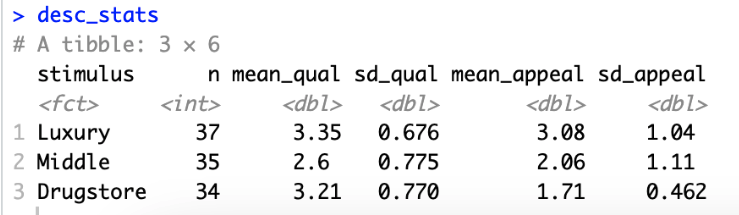
| Rate the overall quality of this product (Luxury stimulus) | Likert scale (1–5) | Mean rating ≈ 3.35 (highest among the three tiers). |
| Rate how visually appealing this packaging is (Luxury stimulus) | Likert scale (1–5) | Mean rating ≈ 3.08; respondents viewed luxury packaging as the most appealing. |
| This product looks like a… (Luxury stimulus) | Multiple choice | Roughly half identified it as a luxury brand; the remainder selected everyday/non-luxury. |
| What elements stood out to you? (Luxury stimulus) | Multiple choice + open-ended | Packaging design was selected most; typography was least selected; some wrote in comments about color and layout. |
| Rate the overall quality of this product (Middle stimulus) | Likert scale (1–5) | Mean rating ≈ 2.60 (lowest of all three groups). |
| Rate how visually appealing this packaging is (Middle stimulus) | Likert scale (1–5) | Mean rating ≈ 2.06; respondents viewed it as noticeably less appealing. |
| This product looks like a… (Middle stimulus) | Multiple choice | Nearly all respondents identified it as an everyday/non-luxury brand. |
| What elements stood out to you? (Middle stimulus) | Multiple choice + open-ended | Packaging design again dominated; several wrote in comments about minimalism and lack of text. |
| Rate the overall quality of this product (Drugstore stimulus) | Likert scale (1–5) | Mean rating ≈ 3.21 (higher than mid-tier but lower than luxury). |
| Rate how visually appealing this packaging is (Drugstore stimulus) | Likert scale (1–5) | Mean rating ≈ 1.71 (lowest of the three tiers). |
| This product looks like a… (Drugstore stimulus) | Multiple choice | The majority identified it as a luxury brand due to gold accents |
| What elements stood out to you? (Drugstore stimulus) | Multiple choice + open-ended | Packaging design was most selected; comments mentioned dripping effect, product oozing, and layout issues. |
Findings:
Statistical testing included ANOVA, MANOVA & Chi-Square.
Overall, the luxury packaging received the highest ratings for appeal, while the middle-tier packaging received the lowest ratings for both quality and appeal. Interestingly, the drugstore packaging performed similarly to luxury in perceived quality, despite receiving low scores for appeal:
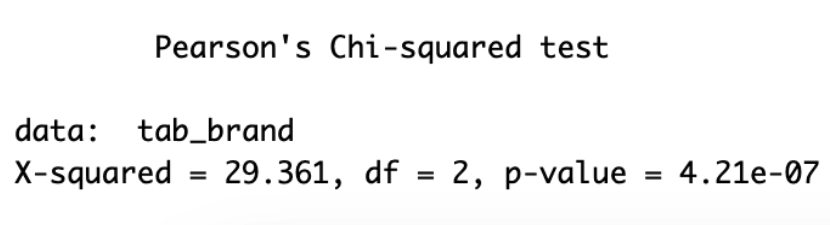
Chi-Squared provided confirmation with a significant p-value of importance:
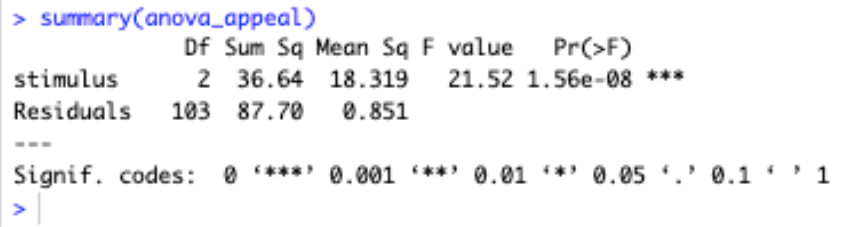
Appeal Anova:
ANOVA was applied to the appeal of the skin tint. At a p-value of 1.56e-06, packaging design was confirmed to be a top driver for consumers making purchasing decisions.
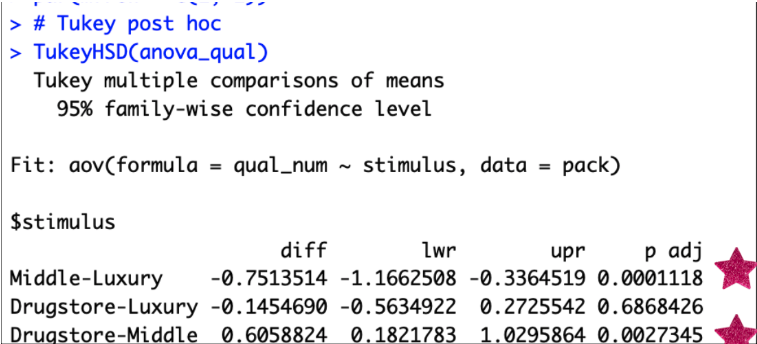
Tukey Post-Hoc
ANOVA analysis can be expanded via Tukey Post-Hoc test to show the jump between packaging tiers. Findings showed that Middle-Luxury tier and Drugstore-Middle Tiers had significant differences, reinforcing that consumers judge quality and appeal simultaneously.
Conclusion
Cosmetic design has a strong influence on how consumers perceive both product quality and visual appeal, even when all product information remains constant.
Higher quality ratings for more refined designs and lower appeal for simplistic designs, strengthens the argument that packaging design serves two purposes of functionality and emotion.
Minimalist or clinical design cues can come across as trustworthy even though there is a lack of an appealing aesthetic.